Minor Arcana · Pentacles
Six of Pentacles
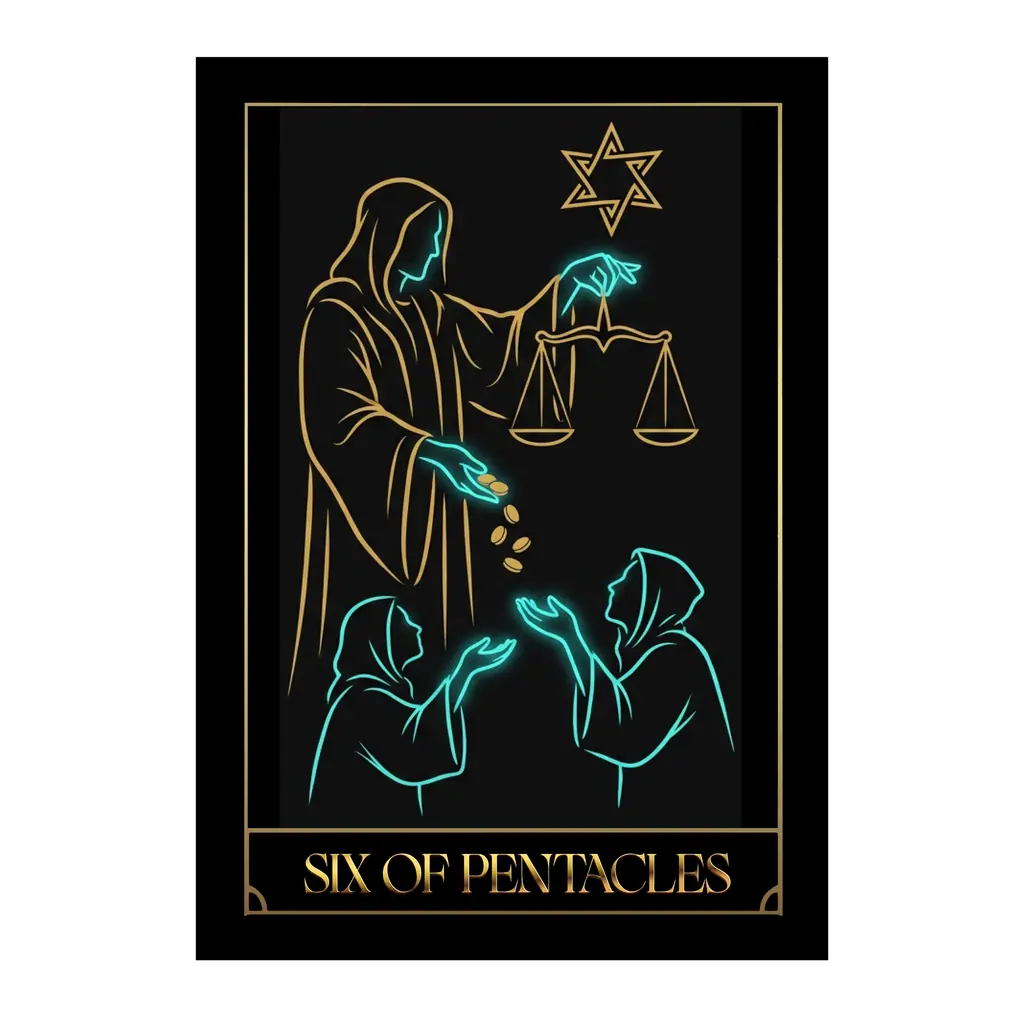
A merchant holds a set of scales in one hand and drops coins into the hands of two kneeling figures with the other. The generosity is real and so is the arrangement: one person is standing, two are kneeling, and someone is weighing. The Six of Pentacles is giving and receiving with the power difference left visible. Charity, sponsorship, a loan from family, mentorship, the raise that is granted rather than negotiated. The card is not cynical about generosity — the coins are actually being handed over — but it refuses to pretend the exchange is between equals. What it asks is that the terms be explicit. Unnamed debts sour, and vague generosity turns into obligation that can be called in at an unspecified rate. Give or receive, and be clear which one is happening and what it means.
- Yes or no
- Yes
- Position in the deck
- Card 70 of 78
Upright meaning
Generosity, and an exchange with terms. Upright, the Six of Pentacles favours giving where you can, accepting help where you need it, and being explicit about which is happening. It reads well for loans, sponsorship and fair settlement. Name the terms out loud — the unstated debt is what causes the damage later.
Reversed meaning
The exchange is unbalanced. Reversed, the Six of Pentacles covers strings attached, generosity used as control, debts that cannot be repaid, and giving that has become a way of staying in charge. It can also mark someone unable to accept anything without feeling indebted. Rewrite the terms.
What the card offers
Give or receive, but be clear which. Unnamed debts sour.
Six of Pentacles in love
Who gives and who receives, and whether anyone has said so. The Six of Pentacles covers relationships with an imbalance in money, time or emotional labour. Imbalance is survivable when it is acknowledged and corrosive when it is not. Name it before it becomes the structure.
Six of Pentacles in work and career
Fair pay, mentorship, and the negotiation of what you are worth. The Six of Pentacles favours asking directly rather than hoping to be noticed. It also asks what you give away — the unpaid help and invisible work that never appears in anyone's assessment of your contribution.
Six of Pentacles and wellbeing
Being cared for, or caring for someone. The Six of Pentacles covers the practical economics of illness — who pays, who takes the time off, what it costs the person providing it. Make that explicit. Care arrangements fail on unspoken expectations more often than on effort.
Six of Pentacles on the spiritual path
Generosity practised rather than felt. The Six of Pentacles is interested in what you actually give and on what terms. It is equally interested in your capacity to receive, which most people find considerably harder and rarely examine.
Did Six of Pentacles show up in your question?
Draw it inside a spread and read it against the cards around it. Free, no sign-up, with a written interpretation.
Questions people ask about this card
What does Six of Pentacles mean upright?
Generosity, and an exchange with terms. Upright, the Six of Pentacles favours giving where you can, accepting help where you need it, and being explicit about which is happening. It reads well for loans, sponsorship and fair settlement. Name the terms out loud — the unstated debt is what causes the damage later.
What does Six of Pentacles mean reversed?
The exchange is unbalanced. Reversed, the Six of Pentacles covers strings attached, generosity used as control, debts that cannot be repaid, and giving that has become a way of staying in charge. It can also mark someone unable to accept anything without feeling indebted. Rewrite the terms.
Is Six of Pentacles a yes or a no?
Six of Pentacles leans towards yes. Give or receive, but be clear which. Unnamed debts sour.
Written by
Truc MaiMore tarot guides
Love Tarot: What a Reading Can Actually Tell You
A love reading will not tell you whether they are the one. It will show you what you are bringing, what they are responding to, and where the connection is actually heading.
How to Ask Tarot a Good Question (Most People Get This Wrong)
Most disappointing tarot readings are not bad readings — they are good answers to badly built questions. Here is how to fix the question before you shuffle.
The Daily Tarot Card: A Practice That Actually Sticks
One card a day is the most useful tarot habit there is — and the easiest to abandon. Here is how to make it stick, and how to read a card that seems to say nothing.