Minor Arcana · Swords
Three of Swords
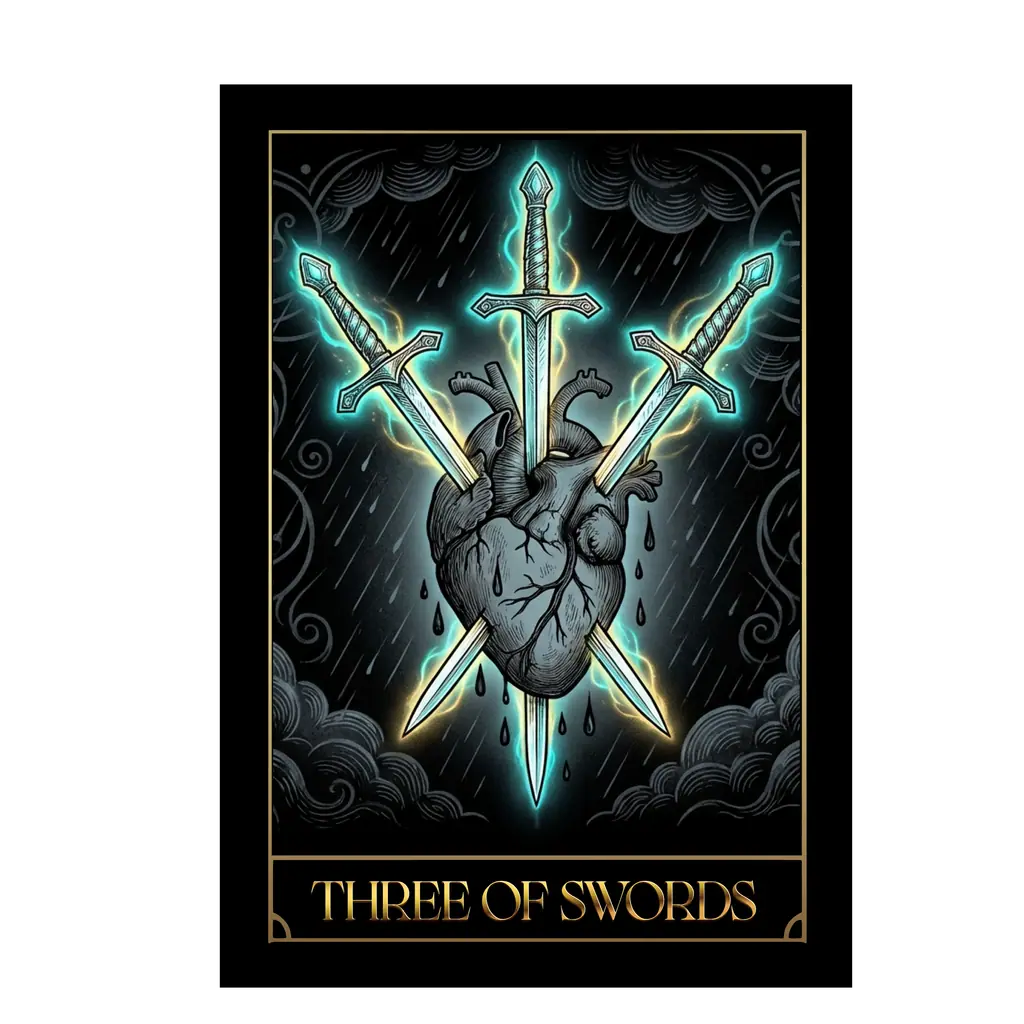
Three swords pierce a heart against a background of rain and grey cloud. There are no people in the card. It is the most direct image in the deck and it does not try to soften anything. The Three of Swords is pain caused by truth. Not misfortune, not loss to circumstance — the specific hurt of finding out, being told, or finally admitting something. Betrayal, rejection, a diagnosis, a sentence someone said that you cannot now unhear. What the card offers is limited and genuine. The swords are clean and the sky is already raining; there is nothing hidden left in this image. Grief that has a clear cause moves differently from grief that is still arguing with itself. It hurt because it was true, and letting it be both is the only route through that does not take years.
- Yes or no
- No
- Position in the deck
- Card 53 of 78
Upright meaning
Heartbreak, and clarity that arrives as pain. Upright, the Three of Swords covers betrayal, rejection, painful news, and the moment something you suspected is confirmed. It does not offer consolation. It says the information is accurate and the grief is proportionate. Feel it directly rather than negotiating with it.
Reversed meaning
The wound is healing or being avoided. Reversed, the Three of Swords can mark recovery beginning, forgiveness, and pain that has stopped being the centre of the day. It can equally mark hurt suppressed, or repeatedly reopened by being retold. Notice whether you are processing it or rehearsing it.
What the card offers
It hurt because it was true. Let it be both.
Three of Swords in love
The painful truth in a relationship: an affair, a rejection, a separation, or something said that cannot be taken back. The Three of Swords does not predict repair and does not rule it out. What it insists on is that the thing be looked at plainly before anyone decides what happens next.
Three of Swords in work and career
Harsh feedback, a redundancy, a betrayal by someone you trusted professionally. The Three of Swords is brutal and often accurate. Separate the content from the delivery — badly delivered criticism can still be correct, and this card usually appears when some part of it is.
Three of Swords and wellbeing
Grief with a physical dimension, and sometimes the heart quite literally. The Three of Swords covers the bad news appointment and the weeks afterward. Do not manage this alone and do not expect to think your way out of it; the body needs the time regardless of what the mind concludes.
Three of Swords on the spiritual path
The loss that cannot be explained away. The Three of Swords is where consoling frameworks stop working, and where the honest response is to stop reaching for one. Traditions that are worth anything have room for this. The ones that rush you past it do not.
Did Three of Swords show up in your question?
Draw it inside a spread and read it against the cards around it. Free, no sign-up, with a written interpretation.
Questions people ask about this card
What does Three of Swords mean upright?
Heartbreak, and clarity that arrives as pain. Upright, the Three of Swords covers betrayal, rejection, painful news, and the moment something you suspected is confirmed. It does not offer consolation. It says the information is accurate and the grief is proportionate. Feel it directly rather than negotiating with it.
What does Three of Swords mean reversed?
The wound is healing or being avoided. Reversed, the Three of Swords can mark recovery beginning, forgiveness, and pain that has stopped being the centre of the day. It can equally mark hurt suppressed, or repeatedly reopened by being retold. Notice whether you are processing it or rehearsing it.
Is Three of Swords a yes or a no?
Three of Swords leans towards no. It hurt because it was true. Let it be both.
Written by
Truc MaiMore tarot guides
Love Tarot: What a Reading Can Actually Tell You
A love reading will not tell you whether they are the one. It will show you what you are bringing, what they are responding to, and where the connection is actually heading.
How to Ask Tarot a Good Question (Most People Get This Wrong)
Most disappointing tarot readings are not bad readings — they are good answers to badly built questions. Here is how to fix the question before you shuffle.
The Daily Tarot Card: A Practice That Actually Sticks
One card a day is the most useful tarot habit there is — and the easiest to abandon. Here is how to make it stick, and how to read a card that seems to say nothing.