Minor Arcana · Cups
Ace of Cups
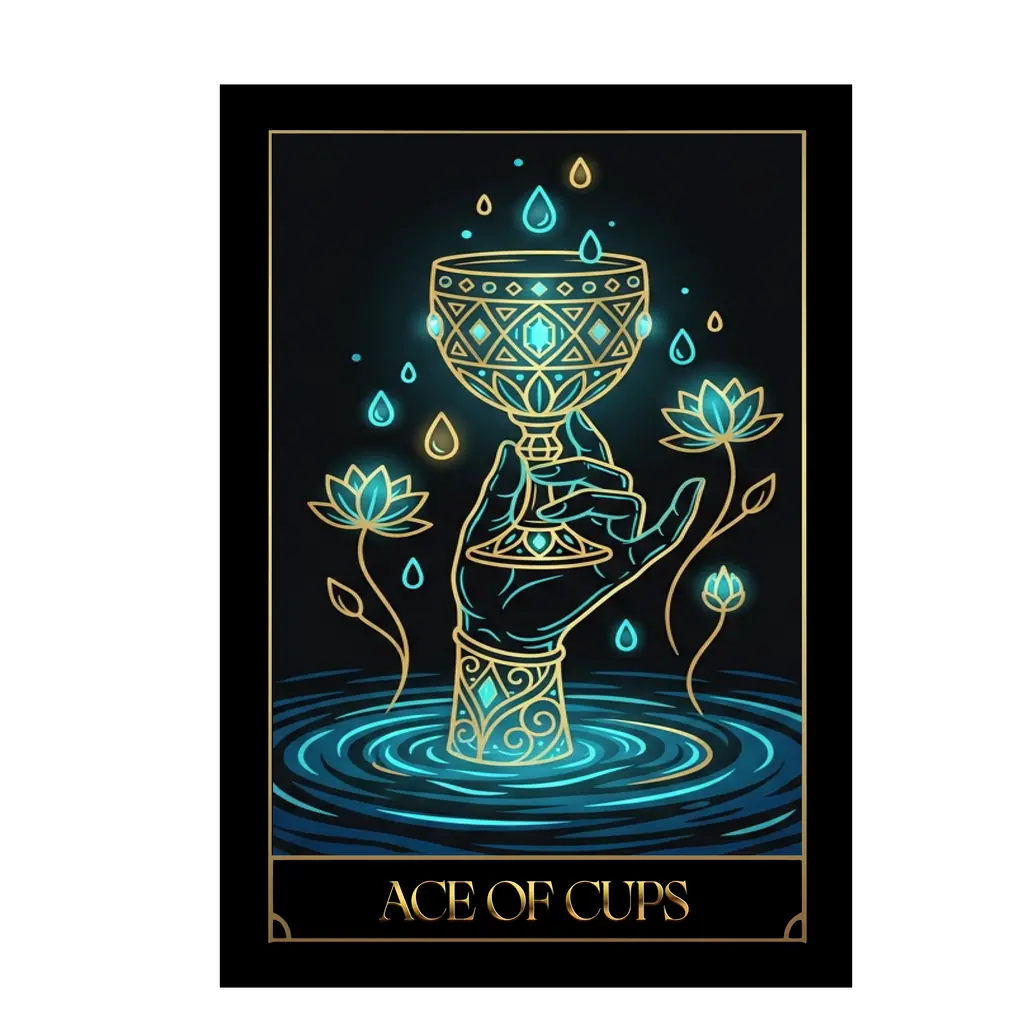
A hand holds out a cup overflowing with five streams while a dove descends toward it. Nothing has been earned here and nothing has been asked for. The cup is simply being offered, and it is already too full to hold. The Ace of Cups is the beginning of feeling rather than of a relationship. It covers falling for someone, the return of tenderness after a numb stretch, a friendship that turns out to matter, and the specific moment when you stop defending yourself against caring about something. What the card asks is uncomfortable in proportion to your history. An offered cup has to be taken, and taking it means being open on purpose, before you know how this goes. Aces do not wait for readiness. The overflow in the image is the point: there is more here than you can manage, and the card's advice is to accept it anyway.
- Yes or no
- Yes
- Position in the deck
- Card 37 of 78
Upright meaning
A new feeling, offered rather than chased. Upright, the Ace of Cups favours love, reconciliation, creative work drawn from something real, and the decision to stop guarding. It reads as an opening rather than an outcome. Let yourself feel it before you start deciding what it means or where it goes.
Reversed meaning
The cup is refused or spilled. Reversed, the Ace of Cups covers emotion blocked at the source, affection offered to someone unable to receive it, and the numbness that follows a long stretch of self-protection. It can also mark feeling poured out with nothing coming back. Ask what the guarding is still for.
What the card offers
Let yourself feel it before you decide what it means.
Ace of Cups in love
The beginning, and specifically the part where you are not yet in control of it. New love, a reconciliation, or the moment someone makes their feelings plain. The Ace of Cups favours saying it first. The card is not about compatibility or timing — it is about whether you will let yourself be affected.
Ace of Cups in work and career
Work that engages something other than competence. A project you care about, a team that feels human, a change of direction toward something you would do for its own sake. The Ace of Cups is a poor card for negotiation and a very good one for deciding what you actually want to spend your days on.
Ace of Cups and wellbeing
Emotional wellbeing as the main variable. The Ace of Cups often appears when the physical complaint has a feeling underneath it, and when the thing that would help most is being cared for. Hydration, rest and company, in that unglamorous order. Let someone look after you.
Ace of Cups on the spiritual path
Grace rather than effort — the experience that arrives without being worked for. The Ace of Cups suits devotional practice, gratitude, and anything that involves receiving rather than achieving. It asks for openness, which is harder than discipline for most people who are good at discipline.
Did Ace of Cups show up in your question?
Draw it inside a spread and read it against the cards around it. Free, no sign-up, with a written interpretation.
Questions people ask about this card
What does Ace of Cups mean upright?
A new feeling, offered rather than chased. Upright, the Ace of Cups favours love, reconciliation, creative work drawn from something real, and the decision to stop guarding. It reads as an opening rather than an outcome. Let yourself feel it before you start deciding what it means or where it goes.
What does Ace of Cups mean reversed?
The cup is refused or spilled. Reversed, the Ace of Cups covers emotion blocked at the source, affection offered to someone unable to receive it, and the numbness that follows a long stretch of self-protection. It can also mark feeling poured out with nothing coming back. Ask what the guarding is still for.
Is Ace of Cups a yes or a no?
Ace of Cups leans towards yes. Let yourself feel it before you decide what it means.
Written by
Truc MaiMore tarot guides
Love Tarot: What a Reading Can Actually Tell You
A love reading will not tell you whether they are the one. It will show you what you are bringing, what they are responding to, and where the connection is actually heading.
How to Ask Tarot a Good Question (Most People Get This Wrong)
Most disappointing tarot readings are not bad readings — they are good answers to badly built questions. Here is how to fix the question before you shuffle.
The Daily Tarot Card: A Practice That Actually Sticks
One card a day is the most useful tarot habit there is — and the easiest to abandon. Here is how to make it stick, and how to read a card that seems to say nothing.