Minor Arcana · Cups
Four of Cups
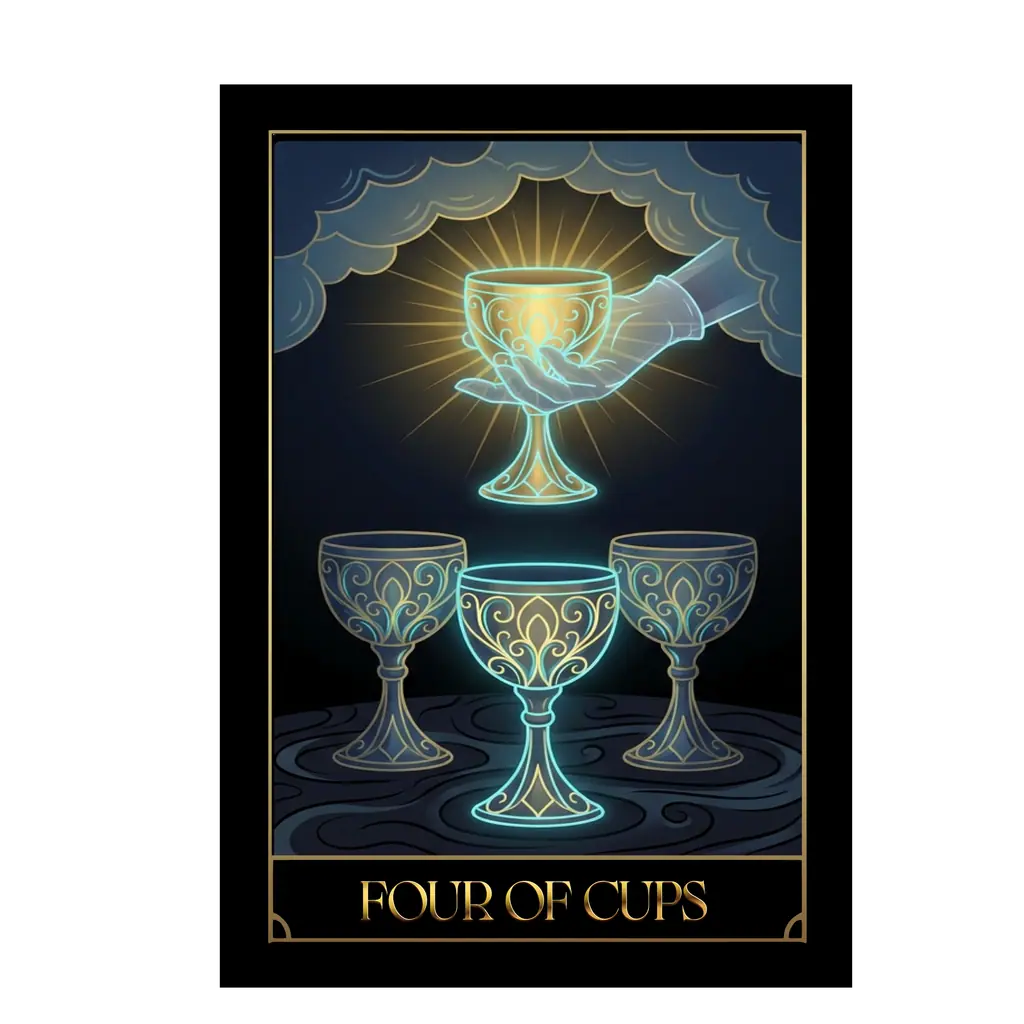
A young man sits under a tree with his arms folded, three cups lined up in front of him, while a fourth is held out from a cloud beside his head. He is not looking at any of them. The Four of Cups is boredom with something that is objectively fine. Not grief, not crisis — the flat, faintly guilty dissatisfaction of having what you asked for and not feeling it. It appears in stable relationships, secure jobs and comfortable stretches, which is exactly what makes it hard to talk about. The offered cup is the working part of the card. Something is genuinely available and you are not registering it, because attention narrows when nothing is urgent. The card does not tell you to be grateful. It tells you to look up, on the grounds that you have been staring at the same three cups for long enough to stop seeing them.
- Yes or no
- No
- Position in the deck
- Card 40 of 78
Upright meaning
Apathy, withdrawal, and an offer you are not noticing. Upright, the Four of Cups describes comfortable dissatisfaction — nothing is wrong and nothing is landing. It favours re-engagement over escape. Look up from the three you already have; something is being held out and you have been looking the other way.
Reversed meaning
The mood breaks. Reversed, the Four of Cups often marks the end of a flat stretch — interest returning, the offer finally accepted, a decision to stop sulking. It can also deepen the problem, into withdrawal that has become a habit rather than a mood. Check whether you are resting or hiding.
What the card offers
Something is being offered and you are too bored to look. Look again.
Four of Cups in love
The comfortable stretch where nobody is unhappy and nobody is really present. The Four of Cups is the relationship on autopilot and the good date you could not be bothered to feel anything about. It asks whether the problem is the person or your own attention, and it is usually the second.
Four of Cups in work and career
A job that is fine. The Four of Cups covers the plateau where the work is secure, the pay is adequate, and you have stopped caring — and also the opportunity you are ignoring because it arrived while you were bored. Look at what has actually been offered before deciding nothing is on the table.
Four of Cups and wellbeing
Low mood rather than illness. The Four of Cups is flatness, poor motivation, and the loss of interest in things that used to work. It is worth taking seriously precisely because it does not announce itself. Small, deliberate re-engagement beats waiting to feel like it.
Four of Cups on the spiritual path
A practice gone stale, and the temptation to conclude it was never real. The Four of Cups says the dryness is a stage rather than a verdict. Most traditions describe this and have something to say about it. Do not quit during it; you will misread the whole thing from here.
Did Four of Cups show up in your question?
Draw it inside a spread and read it against the cards around it. Free, no sign-up, with a written interpretation.
Questions people ask about this card
What does Four of Cups mean upright?
Apathy, withdrawal, and an offer you are not noticing. Upright, the Four of Cups describes comfortable dissatisfaction — nothing is wrong and nothing is landing. It favours re-engagement over escape. Look up from the three you already have; something is being held out and you have been looking the other way.
What does Four of Cups mean reversed?
The mood breaks. Reversed, the Four of Cups often marks the end of a flat stretch — interest returning, the offer finally accepted, a decision to stop sulking. It can also deepen the problem, into withdrawal that has become a habit rather than a mood. Check whether you are resting or hiding.
Is Four of Cups a yes or a no?
Four of Cups leans towards no. Something is being offered and you are too bored to look. Look again.
Written by
Truc MaiMore tarot guides
Love Tarot: What a Reading Can Actually Tell You
A love reading will not tell you whether they are the one. It will show you what you are bringing, what they are responding to, and where the connection is actually heading.
How to Ask Tarot a Good Question (Most People Get This Wrong)
Most disappointing tarot readings are not bad readings — they are good answers to badly built questions. Here is how to fix the question before you shuffle.
The Daily Tarot Card: A Practice That Actually Sticks
One card a day is the most useful tarot habit there is — and the easiest to abandon. Here is how to make it stick, and how to read a card that seems to say nothing.