Minor Arcana · Cups
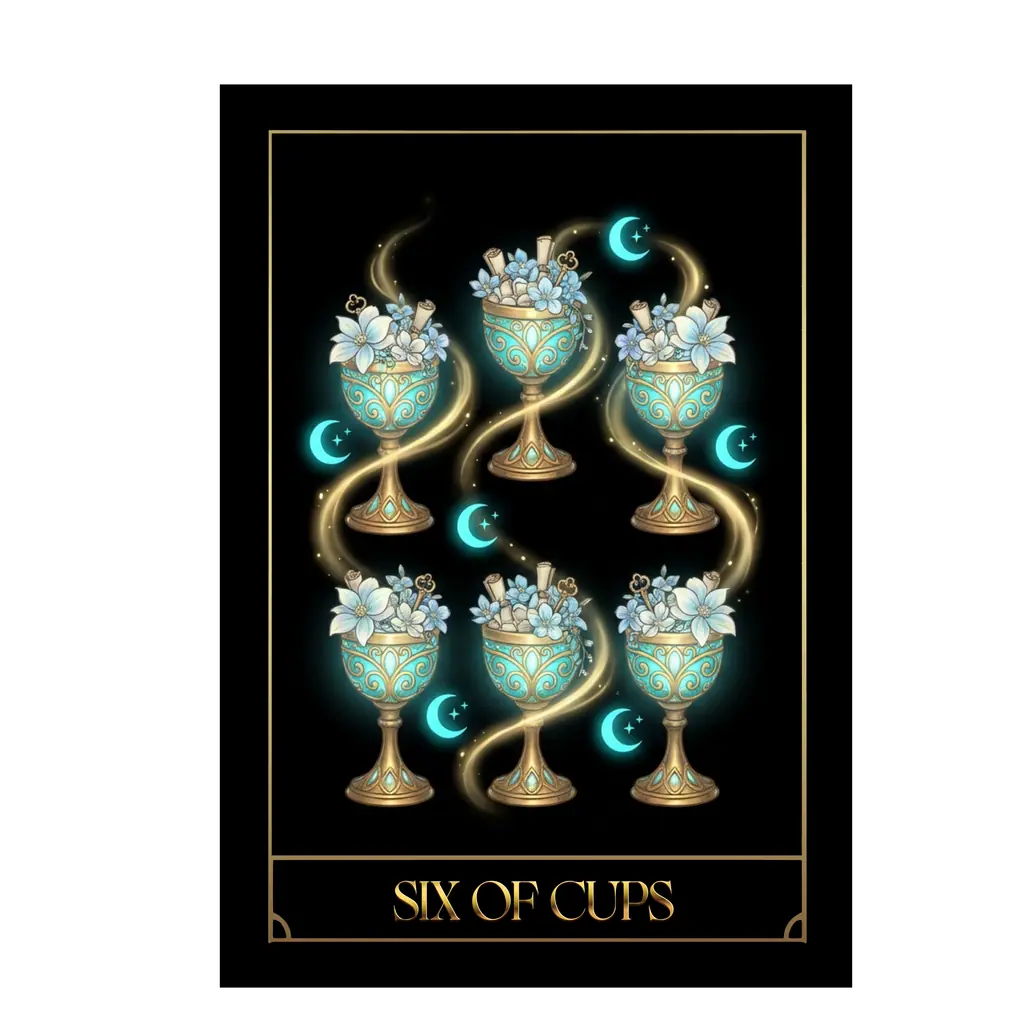
Six of Cups
A child hands another child a cup filled with flowers, in the courtyard of an old house. Everything in the image is gentle, safe and slightly too perfect — which is accurate, because memory works the same way. The Six of Cups is nostalgia, and it covers both what is real about it and what is not. Real: childhood, old friendships, kindness given without calculation, the specific comfort of a place where you were known. Not real: the editing. Memory removes the boredom and the bad afternoons and leaves an impression that nothing in the present can compete with. It appears when the past comes back — someone reappears, you return somewhere, a decision is made on the basis of how things used to be. The card is warm about this and quietly cautious. Visit. Do not move back in.
- Yes or no
- Maybe
- Position in the deck
- Card 42 of 78
Upright meaning
Nostalgia, reunion, and kindness with no agenda attached. Upright, the Six of Cups favours people from your past returning, revisiting somewhere that mattered, and doing something generous simply because you can. It reads gently. Enjoy the memory, and check any decision you are making primarily because of how things once were.
Reversed meaning
The past has become a place to live. Reversed, the Six of Cups covers being stuck in a former version of your life, idealising something that was not that good, and refusing a present that cannot compete with an edited memory. It can also mark a clean break from the past — finally putting it down.
What the card offers
Memory is editing in your favour. Visit the past; do not move back in.
Six of Cups in love
An old relationship resurfacing, or a current one running on shared history. The Six of Cups is affectionate and not clear-eyed. If someone has come back, the question is whether you want them or want the year you were together. Those feel identical for about three weeks.
Six of Cups in work and career
Old contacts, former colleagues, a field you left. The Six of Cups favours reaching back — the person you worked with five years ago is a better lead than any cold approach. It also warns against choosing a role because it resembles one you enjoyed, rather than because it suits who you are now.
Six of Cups and wellbeing
Gentleness, rest, and care of the uncomplicated kind. The Six of Cups suits recovery in familiar surroundings and the value of routines from an easier period — the walk, the meal, the sleep pattern that used to work. It can also point to something inherited or long-standing worth mentioning to a doctor.
Six of Cups on the spiritual path
The tradition you were raised in, returning in a form you can now use. The Six of Cups often marks people coming back to something they rejected at twenty and find different at forty. Approach it as an adult rather than as the child who left.
Did Six of Cups show up in your question?
Draw it inside a spread and read it against the cards around it. Free, no sign-up, with a written interpretation.
Questions people ask about this card
What does Six of Cups mean upright?
Nostalgia, reunion, and kindness with no agenda attached. Upright, the Six of Cups favours people from your past returning, revisiting somewhere that mattered, and doing something generous simply because you can. It reads gently. Enjoy the memory, and check any decision you are making primarily because of how things once were.
What does Six of Cups mean reversed?
The past has become a place to live. Reversed, the Six of Cups covers being stuck in a former version of your life, idealising something that was not that good, and refusing a present that cannot compete with an edited memory. It can also mark a clean break from the past — finally putting it down.
Is Six of Cups a yes or a no?
Six of Cups is a maybe — the answer depends on the surrounding cards. Memory is editing in your favour. Visit the past; do not move back in.
Written by
Truc MaiMore tarot guides
Love Tarot: What a Reading Can Actually Tell You
A love reading will not tell you whether they are the one. It will show you what you are bringing, what they are responding to, and where the connection is actually heading.
How to Ask Tarot a Good Question (Most People Get This Wrong)
Most disappointing tarot readings are not bad readings — they are good answers to badly built questions. Here is how to fix the question before you shuffle.
The Daily Tarot Card: A Practice That Actually Sticks
One card a day is the most useful tarot habit there is — and the easiest to abandon. Here is how to make it stick, and how to read a card that seems to say nothing.